 Solar energy
ECAS and EQM: Getting Solar Equipment Into the UAE
Modules, inverters, cables and batteries are regulated products in the UAE. How ECAS and EQM differ, and why Dubai adds a second gate.
Read story The energy edit
TOPIC DESK
Solar energy news across the Middle East and South Asia — utility-scale tenders and tariffs, rooftop and commercial installations, module supply and the economics behind each project.
Solar is the largest single subject in Arcnex Energy’s coverage, because it is where the Middle East and South Asia are adding the most capacity fastest. We report on project awards, tariff outcomes, construction milestones and the assumptions behind announced numbers.
Coverage spans utility-scale photovoltaic plants and independent power producer tenders, distributed rooftop and commercial and industrial systems, module and inverter supply, land and grid connection constraints, and operations and maintenance performance in high-temperature, high-dust environments.
LATEST
19 stories on this desk.
Solar energyModules, inverters, cables and batteries are regulated products in the UAE. How ECAS and EQM differ, and why Dubai adds a second gate.
Read storySolar energySolar modules and inverters need conformity certificates to clear Saudi customs. How SALEEM, SABER, PCoC and SCoC fit, and where exporters trip.
Read story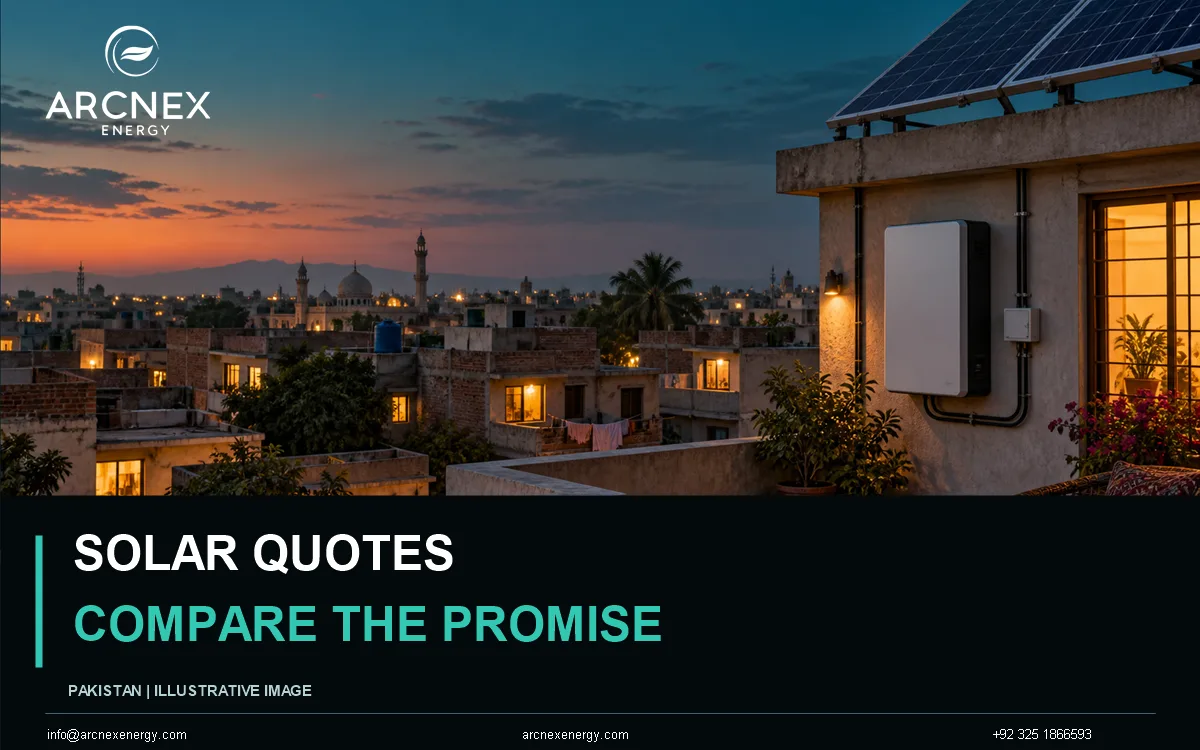 Solar energy
A practical framework for comparing solar offers in Pakistan: define the job, expose exclusions and ask how the promised result will be checked.
Read story Solar energy
Panels contain recoverable materials, but an owner still needs an accepted route, clear responsibilities and records. A lifecycle explainer.
Read story Solar energy
Net billing prices exports and imports separately. A worked method for recalculating a rooftop solar case under Pakistan's 2026 rules.
Read story Solar energy
Three ways to convert solar DC to AC, with very different behaviour under shade. How each handles a partly shaded roof, and which suits what.
Read story Solar energy
Single-axis trackers lift annual output substantially, at the cost of moving parts. How they work, what they gain, and where fixed-tilt wins.
Read storySolar energySolar panels don't stop at 25 years, they gradually produce less. What degradation rates mean, how warranties work, and what shortens life.
Read storySolar energyBifacial modules generate from both faces, but the gain depends on what is underneath. How albedo, mounting height and trackers decide it.
Read storySolar energyThe mono versus poly debate is settled, and the reason is manufacturing economics, not performance. What differs and what to compare instead.
Read storySolar energyIndia's residential rooftop programme offers subsidy support through a national scheme. How the process works, how to size, and where it stalls.
Read storySolar energyDust quietly removes a large share of a desert solar plant's output. How soiling accumulates, what cleaning costs, and why robots took over.
Read storySolar energySolar panels lose efficiency as they heat up, which matters enormously in Gulf and South Asian summers. The physics, the numbers, the fixes.
Read storySolar energyGulf solar tenders produced some of the lowest electricity prices ever recorded. The five factors behind those tariffs, and why they don't travel.
Read storySolar energyFactories have the best solar economics in Pakistan: big daytime loads, big roofs, high tariffs. How to structure and finance a C&I project.
Read storySolar energySolar pumping transformed irrigation economics for Pakistani farmers. How to size a system, what it replaces, and the groundwater risk.
Read storySolar energyOn-grid, off-grid and hybrid inverters do different jobs. How to choose for a Pakistani home or business, and why the wrong one blocks net metering.
Read storySolar energyA step-by-step method for sizing a home solar system in Pakistan from your own bill, plus the load-profile mistake that wastes money.
Read storySolar energyWhy solar prices in Pakistan move the way they do — module imports, the rupee, inverter quality, and the costs quotations bury.
Read storyANSWERS
Utility-scale solar refers to large photovoltaic power plants — typically tens to hundreds of megawatts or more — that sell electricity into the grid under a power purchase agreement, rather than serving a single building or site.
Tariffs reflect solar irradiance, land and grid connection costs, the cost and tenor of debt, currency risk, tender design and the creditworthiness of the offtaker. Two identical plants in different markets can price very differently for those reasons alone.