Policy & markets · South Asia
Sri Lanka's Energy Transition After the Fuel Crisis
Sri Lanka's economic crisis exposed how dangerous fuel import dependence can be. Here is how that shaped its renewable strategy and what other import-dependent markets should learn.

Most countries discuss energy security in the abstract. Sri Lanka experienced it concretely: an economy short of foreign currency could not buy fuel, and a country that could not buy fuel could not generate electricity.
The episode is worth studying by every import-dependent energy system, which includes most of South Asia.
How a currency crisis became a power crisis
The transmission mechanism was direct.
A meaningful share of Sri Lankan electricity came from thermal generation running on imported fuel. That fuel is priced and purchased in foreign currency. When reserves became severely constrained, the country could not purchase fuel in the required volumes.
Generation capacity was intact. Power stations existed and functioned. There was simply nothing to burn in them — and the result was extended, scheduled power cuts.
This is the crucial insight: for an import-dependent system, energy security is a foreign exchange question before it is an infrastructure question. Building more thermal capacity would not have helped. It would have deepened the exposure.
The hydro dependency and its seasonality
Sri Lanka has meaningful hydropower, which supplies a substantial share of generation and is genuinely domestic — no imports, no currency exposure.
Its limitation is variability. Hydro output depends on rainfall, and in dry years the shortfall must be covered by something else. That something else has historically been imported-fuel thermal generation.
So the system had a structural pattern: good rainfall meant comfortable, largely domestic supply; poor rainfall meant heavier fuel imports precisely when foreign currency might be scarce. Two risks that correlate badly.
Why Mannar matters
The Mannar region offers strong and consistent wind, and its value is greater than its capacity alone suggests because of when it generates.
- It complements solar, generating across hours when solar does not, as we describe in Pakistan's wind corridor.
- It can complement hydro seasonally, with wind resource in some periods when water is scarcer.
- It is domestic, displacing imported fuel directly.
For a system whose principal vulnerability is fuel import exposure, a domestic resource that generates when hydro is weak is worth considerably more than a simple capacity comparison implies.
The rooftop response
Sri Lankan households and businesses responded to unreliable supply in the way consumers everywhere do: by generating their own.
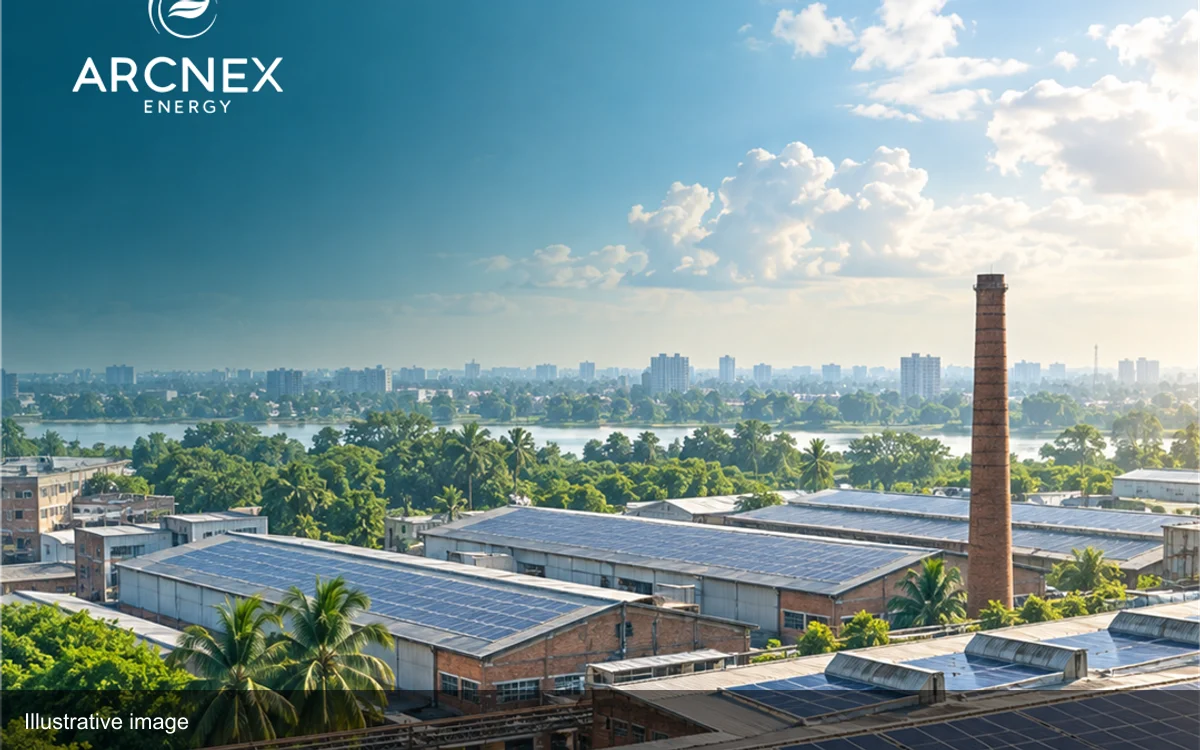
Rooftop solar expanded significantly, driven by a combination of rising tariffs, supply interruptions and the straightforward desire not to depend on a system that had visibly failed.
The pattern closely mirrors Pakistan's rooftop boom — high tariffs plus unreliable supply plus cheap imported modules producing rapid distributed adoption.
And it brings the same second-order challenge. Distributed solar reduces the revenue base of the utility while leaving its fixed costs intact, which puts pressure on tariffs for everyone else. The tariff design question examined in net metering versus gross metering is as live in Colombo as in Lahore.
What the transition requires
- Domestic generation that displaces imported fuel, which is the central objective rather than a co-benefit.
- Complementary resources — wind, solar and hydro generating at different times — to reduce the residual thermal requirement.
- Storage, to convert daytime solar into evening supply.
- Utility financial restructuring, because a utility unable to cover its costs cannot invest or pay generators reliably.
- Tariff structures that recover fixed network costs fairly as distributed generation grows.
The transferable lesson
Sri Lanka's experience is not primarily a story about renewable energy. It is a story about exposure.
A country generating electricity from imported fuel has an electricity system whose reliability depends on its balance of payments. Renewables change that relationship fundamentally: the capital cost is incurred once, frequently with foreign financing, but the ongoing "fuel" is sunlight or wind, which carries no import bill and no currency risk.
For Pakistan, Bangladesh and other import-dependent South Asian systems, that is the most important argument for domestic renewables — more immediate, and often more persuasive to finance ministries, than the climate case.
The bottom line
Sri Lanka demonstrated that fuel import dependence is a macroeconomic vulnerability that manifests as darkness. Its transition is best understood as reducing that exposure — and the resource that does so while complementing existing hydro is the most valuable resource it has.
Follow the energy security story across South Asia
Fuel import exposure is the region's shared vulnerability, and it shapes policy far more than headline climate targets do.
- Read our South Asia energy coverage for policy and market developments.
- Explore the policy and markets desk for structural analysis.
- Subscribe to The Energy Edit — free, independent reporting. Start here.
Working on energy security or renewable development in South Asia? Explore partnership with Arcnex Energy.
ANSWERS
Questions answered in this story
Why did Sri Lanka experience power cuts during its economic crisis?
Because a large share of generation relied on imported fuel purchased in foreign currency. When reserves became depleted, fuel could not be bought in sufficient quantity and generation had to be curtailed.
What share of Sri Lanka's electricity comes from hydropower?
Hydropower supplies a substantial portion, but the share varies considerably year to year with rainfall, which is why dry periods increase reliance on thermal generation.
Why is Mannar important for wind energy?
The Mannar region experiences strong, consistent wind, making it the country's most significant wind resource and a natural complement to seasonal hydro and daytime solar.
What is the main lesson from Sri Lanka's experience?
That for import-dependent systems, energy security and currency stability are inseparable. Domestic renewable generation reduces both fuel exposure and foreign exchange demand at once.