Policy & markets · South Asia
Bangladesh's Energy Transition: Land Scarcity and the Solar Problem
Bangladesh pioneered off-grid solar at extraordinary scale, yet utility-scale renewables remain limited. Land scarcity explains most of the gap — and shapes what comes next.

Bangladesh presents an instructive paradox. It ran one of the most successful distributed solar programmes in history, yet has comparatively little utility-scale renewable capacity. Understanding why reveals a constraint that most energy analysis underweights.
The off-grid achievement
Before grid coverage expanded, Bangladesh deployed small solar home systems to rural households at remarkable scale — millions of installations, reaching communities the grid had not.
Each system was modest: enough for lighting, phone charging and a fan. The significance was in the delivery model, combining microfinance, a network of local providers, quality standards and technical support.
It remains one of the clearest demonstrations anywhere that distributed solar can electrify dispersed rural populations faster than grid extension. Much of that installed base has since been superseded by grid connection — which is a success, not a failure, of the sequencing.
Why utility-scale solar is hard here
Bangladesh is among the most densely populated countries on earth, and its land is among the most agriculturally productive.
A utility-scale solar plant occupies a large contiguous area. In Bangladesh, that land is almost certainly growing food, supporting livelihoods, or both.
This produces an acute version of a trade-off many countries face:
- Land has high alternative value, so acquisition is expensive.
- Displacement affects many households, making projects socially and politically difficult.
- Food security considerations weigh directly against energy considerations.
- Flood-prone terrain adds engineering cost.
Compare this with the Gulf, where flat desert with no competing use is allocated to projects at low cost — one of the five factors in why Gulf solar is so cheap. Bangladesh has the opposite endowment. The sunshine is adequate; the land is not available.
Where the opportunity actually is
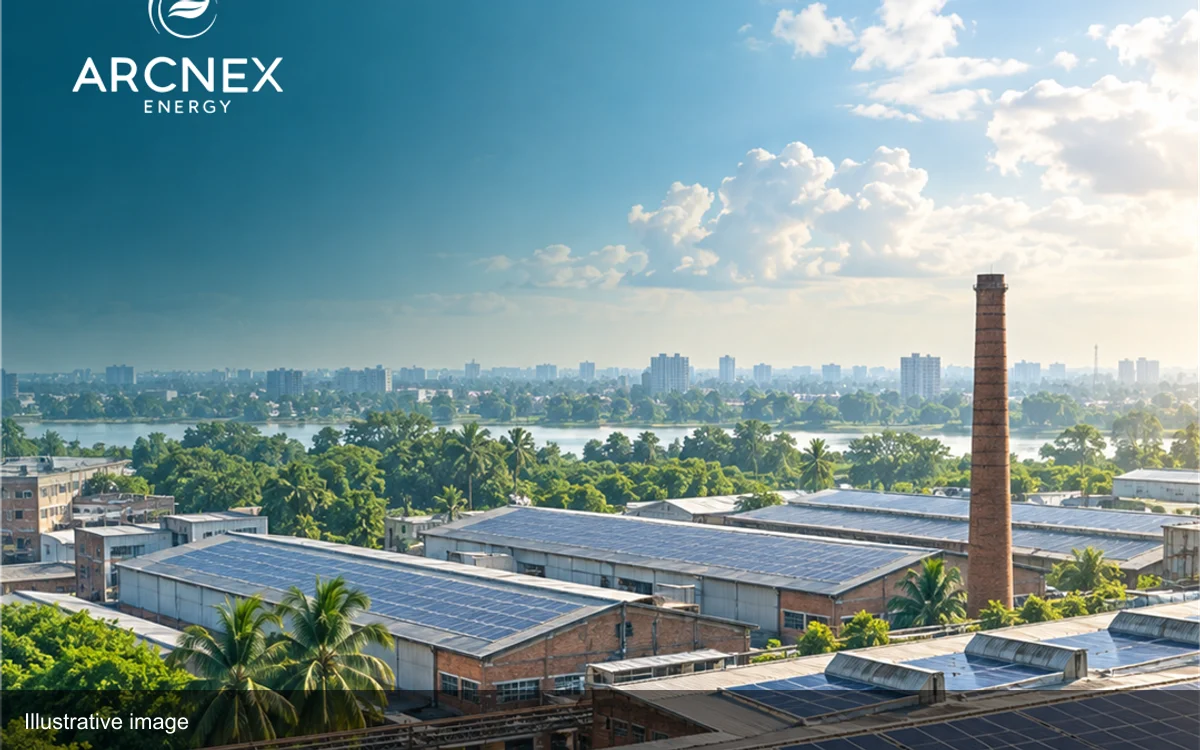
Industrial and commercial rooftops — and the garment sector in particular.
The logic is strong on every dimension:
- Large roof areas already exist, requiring no land acquisition.
- Daytime consumption is high, so most generation is self-consumed at full value rather than exported. This is the variable that decides project returns, as we explain for commercial solar in Pakistan.
- International buyers increasingly demand supply chain emissions reductions, giving factories a commercial as well as financial reason to install.
- Grid reliability concerns add value to on-site generation.
The garment industry's combination of export-market pressure and large rooftops makes it arguably the single most promising renewable opportunity in the country.
The barriers are financing structures, net metering implementation, roof structural capacity on older buildings, and split incentives where factories are leased rather than owned.
Other options, honestly assessed
Floating solar. Bangladesh has substantial water bodies, and floating arrays avoid the land conflict entirely. Costs are higher than ground-mounted, and monsoon conditions demand robust engineering, but the land logic is compelling enough to justify serious attention.
Wind. Coastal resource exists but is modest compared with the Gulf of Suez or Pakistan's Sindh corridor. It is a supporting contributor rather than a foundation.
Cross-border trade. Importing electricity from neighbours with surplus generation is pragmatic and has supplied meaningful volumes, though it creates dependency and currency exposure.
Efficiency. Persistently underrated. Industrial motor efficiency, building standards and transmission loss reduction avoid demand that would otherwise need generating — usually at lower cost than building new capacity.
The gas and import exposure
Domestic gas-fired generation and electricity imports have carried much of Bangladesh's demand growth. As domestic gas production has matured, imported fuel has taken a larger role. How to read a reliability headline from that same grid is set out in Bangladesh’s Godda reconnection.
That creates two exposures: price volatility in international fuel markets, and currency risk, since fuel is bought in dollars while electricity is sold in taka. The combination has tightened public finances during periods of high global energy prices — a pattern with clear echoes in Sri Lanka's experience.
Domestic renewables are, among other things, a hedge against both.
The bottom line
Bangladesh's renewable constraint is land, not sunlight. That points decisively toward rooftops rather than fields — with industrial rooftops in export-oriented manufacturing the clearest opportunity available, and floating solar the most interesting frontier.
Follow a market where the constraints are unusual
Bangladesh shows what the energy transition looks like where land is the scarcest input.
- Read our South Asia energy coverage for policy and project developments.
- Explore the policy and markets desk for the structures behind them.
- Subscribe to The Energy Edit — free, independent reporting. Start here.
Working with industrial rooftop solar or energy finance in Bangladesh? Explore partnership with Arcnex Energy.
ANSWERS
Questions answered in this story
Why does Bangladesh have low utility-scale solar capacity?
Primarily land. Bangladesh is among the most densely populated countries in the world and its land is highly productive agriculturally, so large ground-mounted solar competes directly with food production.
What were Bangladesh's solar home systems?
A large-scale programme that installed small solar systems in rural households without grid access, becoming one of the biggest off-grid electrification efforts ever undertaken.
Where is the best opportunity for solar in Bangladesh?
Industrial and commercial rooftops, especially in the garment sector, which combines large roof areas with substantial daytime electricity consumption and export-market pressure to decarbonise.
Does Bangladesh import electricity?
Yes. Cross-border electricity trade with neighbouring markets has supplied a meaningful share of demand alongside domestic gas-fired generation.